Cold Press Juicer vs Normal Juicer: A UK Buyer's Guide
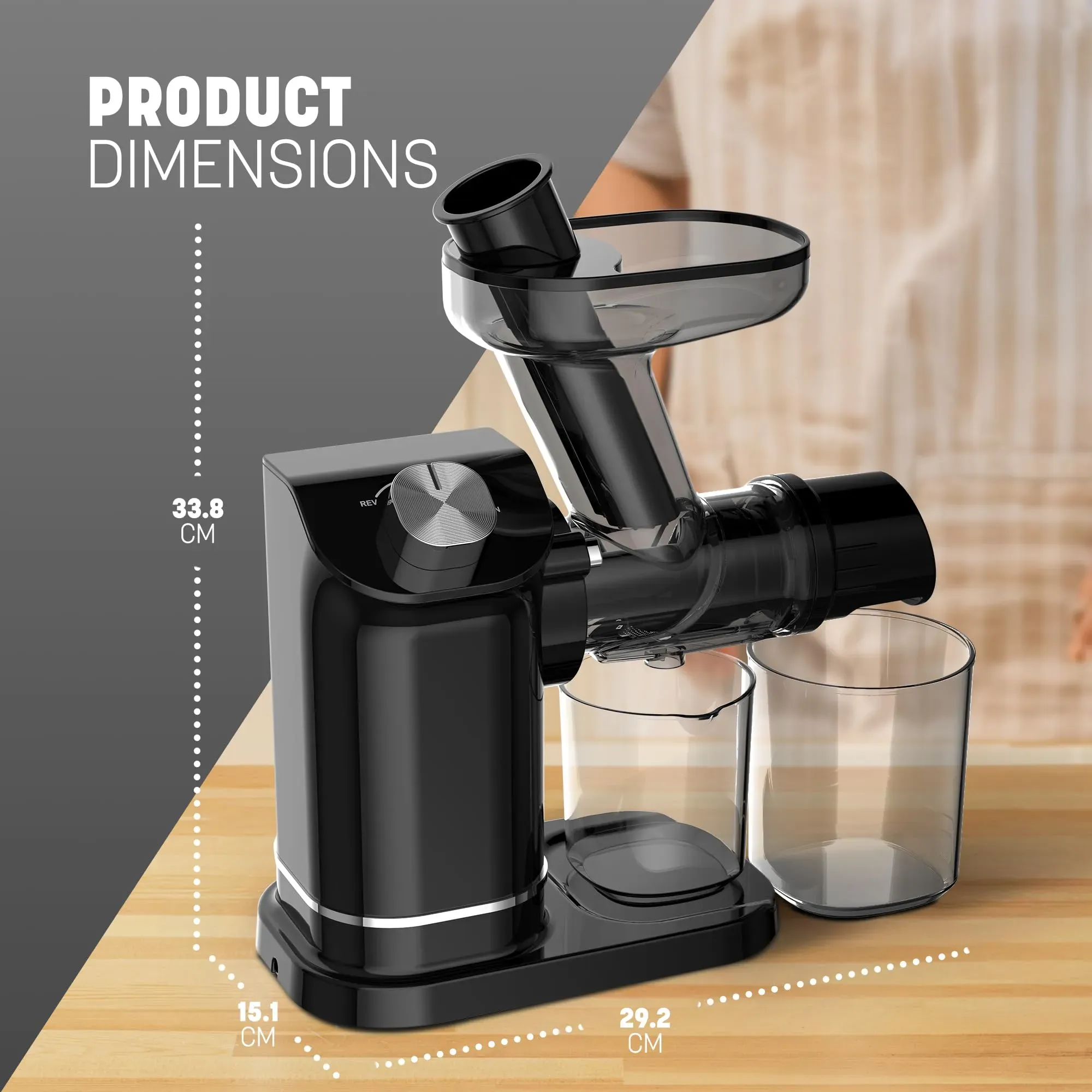
TL;DR: In the cold press juicer vs normal juicer debate, the machines differ in one mechanical choice. A normal (centrifugal) juicer shreds produce with a fast-spinning blade and flings it against a strainer — quick, but noisy, foamy and wasteful with leafy greens. A cold press (masticating) juicer crushes produce slowly against a screen, so it squeezes more juice from the same shopping, leaves drier pulp, hums rather than screams and makes juice that keeps for a day or two. If your current centrifugal machine leaves pulp wet enough to wring out, upgrading is usually what makes home juicing stick.
Most people typing cold press juicer vs normal juicer into a search bar already own the "normal" one. The pattern is familiar: the machine roars into life, a whole bag of spinach vanishes, and a disappointingly shallow layer of froth sits at the bottom of the jug while the pulp bin fills with wet, heavy waste. This guide explains why that happens, what genuinely changes when you switch to a slow auger, and — just as honestly — when a centrifugal juicer remains the sensible choice.
How a normal (centrifugal) juicer works
A centrifugal juicer is essentially a grater welded to a fan. Produce is pushed onto a flat blade spinning at very high speed — often 10,000 RPM or more — which shreds it into fine particles. Centrifugal force then throws those particles against a mesh basket, and the juice that escapes through the mesh collects in your jug.
The design has real strengths. It is fast (a glass in well under a minute), the machines are usually cheaper, and hard round fruit like apples suits the shredding action. The weaknesses follow from the same physics: all that speed whips air into the juice, creating foam and quicker browning; fibrous greens slip past the blade half-shredded; and the motor noise sits in hair-dryer territory — the classic 7 am jet-engine problem if anyone in the house is still asleep.
How a cold press juicer works
A cold press juicer — the same thing as a masticating or slow juicer — takes the opposite approach. A screw-shaped auger turns at low speed (typically 40–80 RPM) and crushes produce against a static screen, squeezing juice out under pressure rather than tearing it out at speed. "Cold" simply means the low speed avoids friction warmth; nothing is refrigerated.
Pressing suits fibrous ingredients. Kale, spinach and celery that a spinning blade barely touches get properly crushed, and the pulp comes out compressed and dry. The trade-offs are a slower feed — you add produce piece by piece over a few minutes — and a slightly taller stack of parts to rinse afterwards.
Cold press vs normal juicer: the differences you'll actually notice
| What you notice | Normal (centrifugal) | Cold press (masticating) |
|---|---|---|
| Juice from leafy greens | Poor — leaves often pass through barely juiced | Strong — crushing extracts from fibrous leaves |
| Pulp | Wet and heavy; squeezable by hand | Compressed and much drier |
| Noise | High-pitched whine, typically 80 dB or more | Low hum; quiet models run under 60 dB |
| Foam and separation | Noticeable foam; separates quickly | Little foam; slower to separate |
| Speed per glass | Under a minute | A few minutes |
| Juice keeping time | Best drunk immediately | Typically 48–72 hours refrigerated in a sealed bottle |
The yield difference is the one that changes your weekly shop, and it varies a lot by ingredient — huge on kale, small on carrots. We've collected the published test numbers separately in our masticating vs centrifugal juice yield guide, so this page can stay focused on the buying decision.
The leafy-green test: where normal juicers give up
If celery juice or a daily green blend is the reason you juice, this is the deciding section. Spinning blades rely on produce being dense enough to press against the blade; flat leaves and stringy stalks simply ride the airflow. A slow auger grips those fibres and crushes them, which is why upgraders consistently report the same two observations: visibly more juice from the same bunch of greens, and pulp that finally feels dry. A reverse function — standard on our 80 RPM machine — also stops celery strings wrapping the auger mid-batch.
Which should you choose?
Stay with a normal juicer if: you mostly juice apples, oranges and other hard or citrus fruit; you want a glass in seconds; the machine only comes out at weekends; or the budget is genuinely tight. A centrifugal machine doing occasional fruit juice is not a mistake — juice from either machine still counts as a maximum of one of your five-a-day (about 150 ml), so occasional juicers gain little from upgrading.
Switch to a cold press juicer if: greens and celery are the point; you juice most mornings; noise matters in your household; or you are tired of paying for produce that ends up as wet pulp. You no longer need premium-brand money for the switch — our AMZCHEF cold press slow masticating juicer runs an 80 RPM auger at under 60 dB for £134.21, with a 4.7★ average from 432 reviews, free next-day UK delivery and a 12-month warranty.
Completely new to juicing rather than upgrading? Start with our cold press juicer guide for UK beginners instead — it covers the basics this comparison assumes.
What upgraders worry about — and what's actually true
"Slow juicers take forever." Per glass, expect a few extra minutes: feeding is gradual and the press does its work at 80 RPM. Most owners absorb this by prepping produce the night before. It is slower; it is not impractical.
"More parts means miserable cleaning." There are more parts than a centrifugal basket, but they rinse in minutes if you do it straight away — dried pulp is what makes any juicer hard work. One-button disassembly and a cleaning brush keep it to roughly the effort of washing a saucepan.
"Is the upgrade actually worth £134.21?" Do one honest calculation: weigh what you spend weekly on juicing produce, then squeeze your current machine's pulp over the sink. If water streams out, a meaningful slice of that spend is going in the bin — that recovered yield, plus quieter mornings, is what you are buying.
Frequently Asked Questions
Is cold press juice healthier than juice from a normal juicer?
The low-speed press introduces less air and no friction warmth, so the juice foams less, browns more slowly and keeps its fresh taste longer. Treat bigger health claims cautiously: however it is made, juice counts as one portion of your five-a-day at most, and whole fruit and veg keep their fibre.
Are cold press juicers much slower than centrifugal ones?
Per glass, yes — a few minutes rather than under a minute, because produce feeds in gradually. Many owners batch-make two or three days of juice in one session, which the longer keeping time makes practical.
Can a normal juicer handle celery and kale at all?
It will extract something, but expect wet pulp and a shallow glass. Fibrous, stringy produce is exactly where the shredding design struggles and the crushing design earns its keep.
How long does cold press juice keep?
Stored airtight and refrigerated immediately, 48–72 hours is a realistic window. Juice heavy on apple or pear browns fastest, so drink those blends sooner.
Ready to retire the jet engine?
AMZCHEF Cold Press Juicer · 150W · <60dB · 4.7★ from 432 reviews · Free UK delivery · 30-day returns
Shop the 80 RPM Cold Press Juicer — £134.21